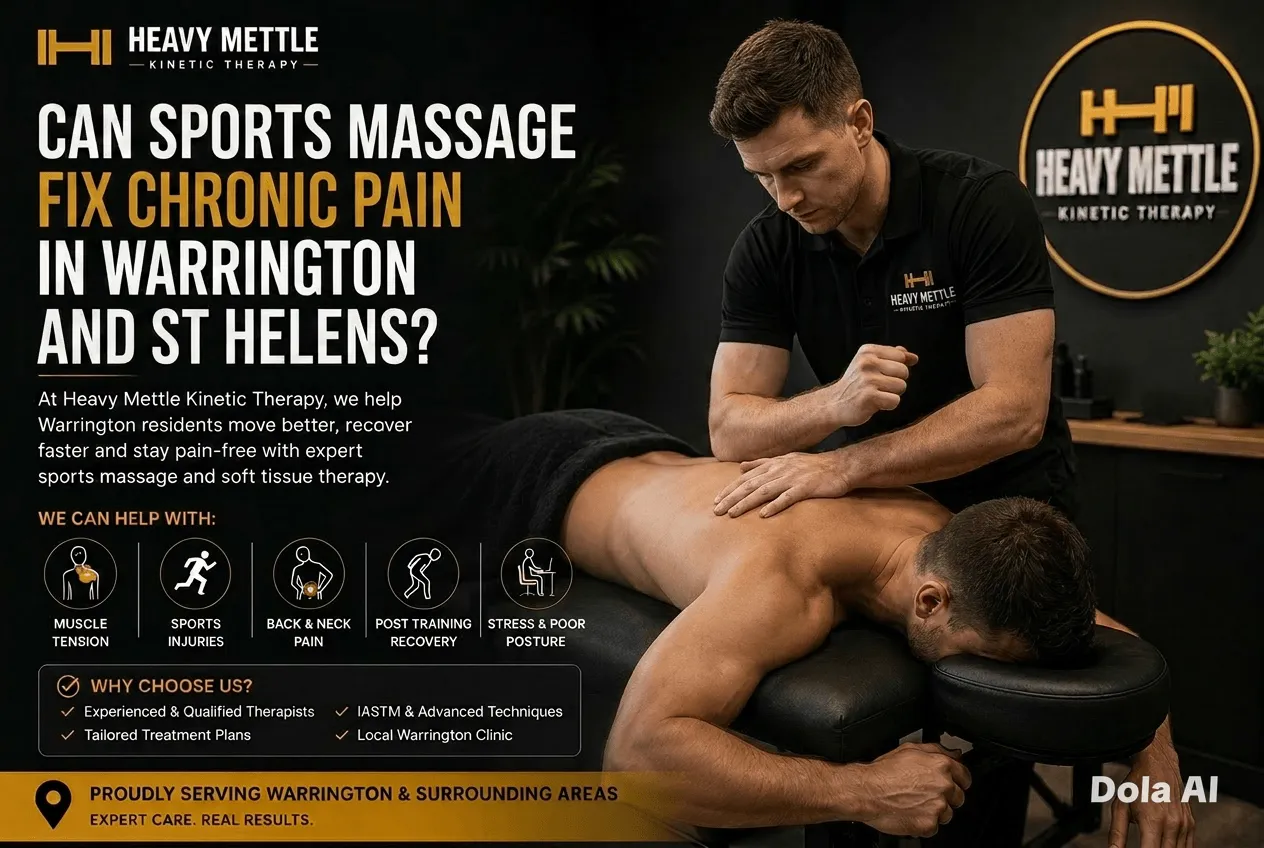
Chronic pain is one of the most common reasons people seek out hands-on treatment. Whether it’s persistent lower back pain, ongoing knee issues, tight shoulders, or recurring soft tissue discomfort, many people in Warrington and St Helens turn to sports massage as a first step toward relief.
While sports massage can absolutely play a role in symptom management, it’s important to understand its limitations—especially when it comes to long-term or chronic pain conditions. In many cases, it is not the most effective standalone solution. More targeted approaches such as Instrument Assisted Soft Tissue Mobilisation (IASTM) and kinetic therapy are often better suited for lasting change.
This article breaks down what sports massage can and cannot do, why chronic pain behaves differently from acute injury, and what evidence-informed alternatives may be more appropriate.
⸻
What Sports Massage Actually Does
Sports massage is widely used across clinics and sports settings for good reason. It can help reduce muscular tension, improve short-term mobility, and create a sense of relaxation and relief.
From a physiological standpoint, sports massage works primarily through:
- Neurological modulation of pain
- Temporary reduction in muscle tone
- Increased local blood flow
- Stimulation of mechanoreceptors in soft tissue These effects can be extremely useful, especially after training, injury, or periods of increased physical stress. Many people report feeling looser and less stiff immediately after treatment.
However, these changes are generally short-term. The tissue itself is not being fundamentally altered in a lasting structural way, and the underlying drivers of chronic pain are often not being directly addressed.
Understanding Chronic Pain: It’s Not Just “Tight Muscles”
One of the biggest misconceptions in musculoskeletal therapy is that chronic pain is caused purely by “tight” or “knotted” muscles.
Modern pain science shows that chronic pain is far more complex.
In many long-term cases, pain is influenced by:
- Changes in the nervous system (central sensitisation)
- Altered movement patterns
- Load intolerance in tissues
- Previous injury history
- Stress and sleep factors
- Reduced variability in movement This means pain can persist even when tissue damage has healed. The nervous system becomes more sensitive, and normal inputs can start to feel painful.
Because of this, approaches that only focus on short-term muscle relaxation often fail to produce lasting results.
Why Sports Massage Often Falls Short in Chronic Pain Cases
While sports massage can provide temporary relief, there are several reasons it may not be sufficient for chronic pain:
- Short-lived effects
Most people experience relief for hours or days, but symptoms often return once normal activity resumes.
- Doesn’t change movement behaviour
Chronic pain is often linked to how a person moves, loads tissues, and compensates. Massage alone doesn’t retrain these patterns.
- Over-simplified tissue model
The idea that chronic pain is purely due to “tight muscles” or “knots” is outdated and doesn’t reflect current evidence.
- Lack of progressive loading
Long-term adaptation requires gradual loading and rehabilitation, which massage does not provide.
For these reasons, sports massage is better viewed as a supportive tool rather than a primary solution for persistent pain conditions.
A More Effective Approach: IASTM & Kinetic Therapy
For people dealing with long-standing or recurring pain, more structured and active approaches tend to be more effective.
Two methods that are increasingly used in modern rehab settings are IASTM (Instrument Assisted Soft Tissue Mobilisation) and kinetic therapy.
What is IASTM?
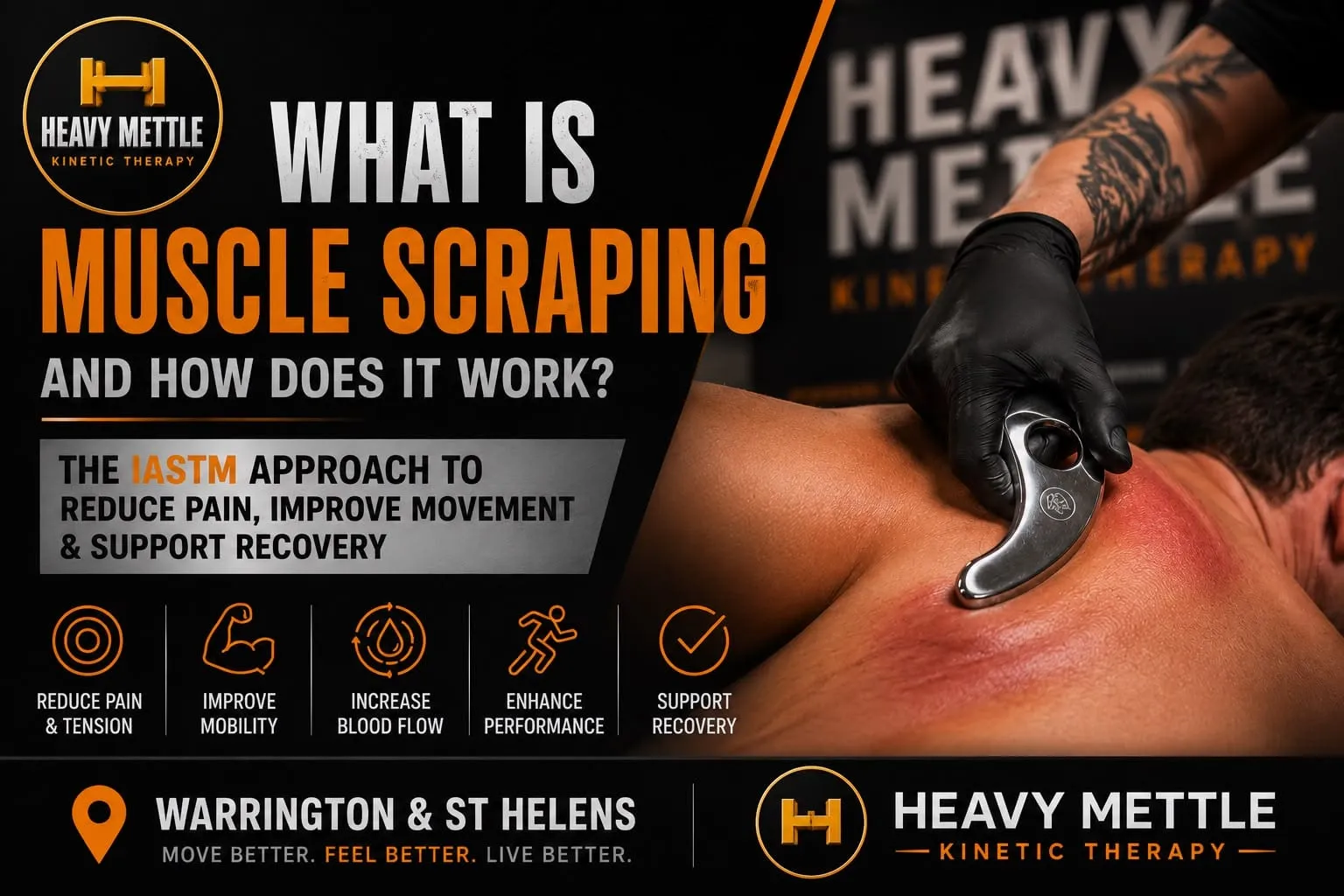
IASTM involves using specialised tools to apply controlled mechanical stimulation to soft tissues. Unlike traditional massage, it allows for more precise input into restricted or sensitive areas.
The proposed benefits include:
- Improved tissue glide between layers
- Stimulation of mechanoreceptors
- Increased local circulation
- Neurological down-regulation of pain sensitivity
- Support for remodelling of irritated soft tissue Importantly, IASTM is not about “breaking up scar tissue” in a literal sense. Instead, it is believed to work through mechanotransduction, where mechanical input influences cellular and neurological responses.
What is Kinetic Therapy?
Kinetic therapy focuses on how the body moves as a system rather than treating isolated muscles.
Instead of only addressing where pain is felt, it looks at:
- Movement chains
- Load distribution
- Joint coordination
- Compensation patterns
- Strength and control deficits This approach recognises that pain is often the result of how the body functions under load—not just local tissue irritation.
By combining manual therapy like IASTM with movement-based rehabilitation, it becomes possible to create more durable changes.
Why IASTM and Kinetic Therapy Are More Effective for Chronic Pain
Compared to passive treatments like sports massage, these approaches offer several advantages:
- They address both structure and function
IASTM targets tissue sensitivity, while kinetic therapy retrains movement patterns.
- They promote long-term adaptation
Progressive loading helps tissues become more resilient over time.
- They align with modern pain science
They consider nervous system sensitivity and motor control, not just muscle tension.
- They reduce recurrence
By addressing the root movement dysfunction, symptoms are less likely to return in the same pattern.
So, Can Sports Massage Help Chronic Pain?
The honest answer is: not in a long-term or standalone sense.
Sports massage can help with:
- Temporary pain relief
- Relaxation
- Short-term mobility improvements But when it comes to chronic pain conditions—especially those that have persisted for months or years—it is rarely enough on its own to create lasting change.
The Bottom Line
If you are dealing with persistent pain in Warrington, St Helens, or surrounding areas, sports massage may provide short-term comfort, but it is unlikely to resolve the underlying issue.
A more effective strategy is to combine:
- IASTM for targeted soft tissue and neurological input
- Kinetic therapy for movement re-education and load adaptation This combined approach is more aligned with how chronic pain actually develops and persists—and offers a better pathway toward long-term improvement.
Looking for a More Effective Approach?
If you’ve tried sports massage and your symptoms keep returning, it may be time to look at a more structured assessment-based approach. Techniques like IASTM and kinetic therapy can be tailored to your specific movement patterns and pain drivers, offering a more complete solution than passive treatment alone.