If you’ve seen videos of therapists using metal tools on muscles and wondered what it is, you’re not alone.
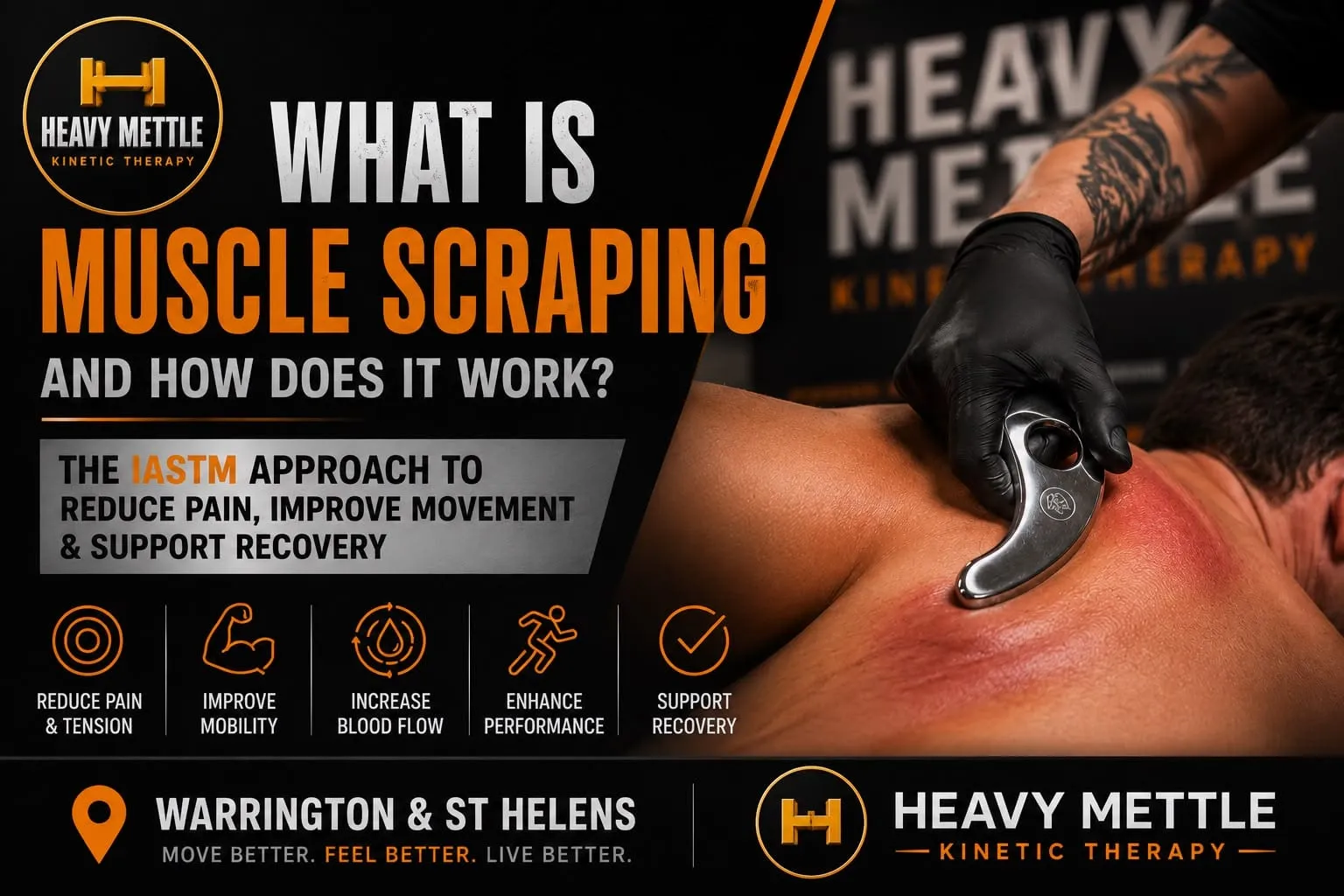
Muscle scraping, also known as Instrument Assisted Soft Tissue Mobilisation (IASTM), is becoming increasingly popular among people looking for relief from pain, stiffness, tight muscles and movement restrictions.
At Heavy Mettle Kinetic Therapy, muscle scraping is one of the primary techniques used to help clients in Warrington, St Helens and the surrounding areas move better, train harder and live with less pain.
But what exactly is it, and how does it work?
What Is Muscle Scraping?
Muscle scraping is a soft tissue treatment that uses specially designed stainless-steel tools to assess and treat muscles, tendons, fascia and other connective tissues.
The tools allow a therapist to detect areas of restriction, tightness and tissue dysfunction that may be contributing to pain or reduced movement.
Despite the name, the technique does not actually scrape the muscle itself. Instead, controlled pressure is applied over the skin and underlying tissues using specifically shaped instruments.
This treatment method is commonly known as:
- Muscle Scraping
- IASTM
- Instrument Assisted Soft Tissue Mobilisation
- Soft Tissue Mobilisation
- Fascial Release Therapy Although the names vary, the goal remains the same: improve tissue function and restore movement.
How Does Muscle Scraping Work?
When tissues become overloaded, injured or restricted, the body can develop compensations that affect movement patterns.
Over time this can lead to:
- Muscle tightness
- Joint stiffness
- Reduced mobility
- Persistent aches and pains
- Poor performance in the gym or sport Muscle scraping works by applying targeted mechanical pressure to these restricted areas.
This may help:
- Improve tissue mobility
- Reduce tension in muscles and fascia
- Increase local blood flow
- Improve range of motion
- Improve tissue tolerance to movement
- Restore normal movement patterns At Heavy Mettle Kinetic Therapy, the treatment is never performed in isolation.
Your assessment includes looking at how your body moves as a whole to identify where the problem may actually be coming from rather than simply treating the painful area.
What Conditions Can Muscle Scraping Help With?
People often associate muscle scraping with sports injuries, but it can be useful for a wide range of issues.
Common conditions we regularly see in Warrington and St Helens include:
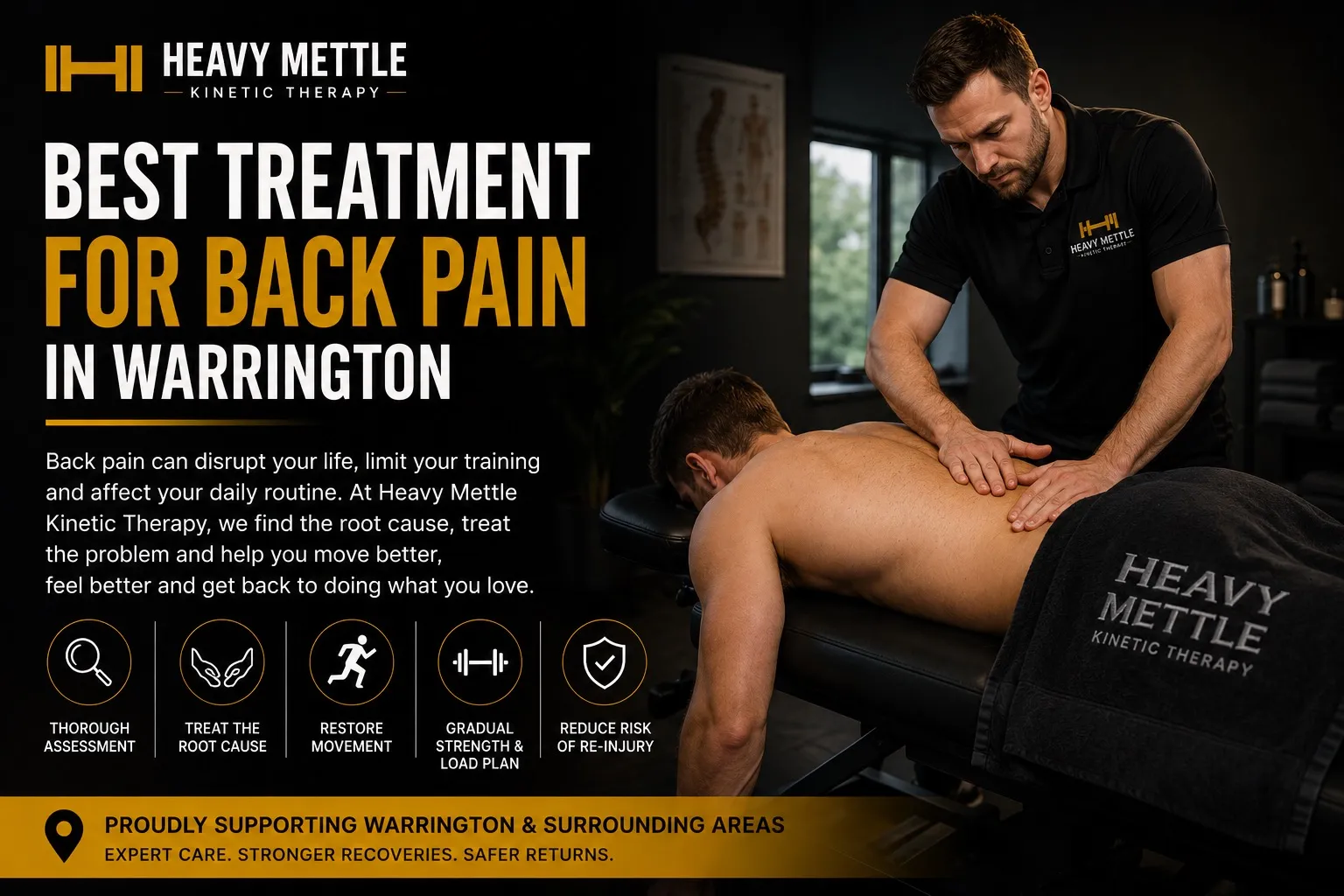
Back Pain
Many people spend hours sitting at desks, driving or working in fixed positions.
This can create stiffness and movement restrictions that contribute to ongoing back pain.
Neck and Shoulder Pain
Shoulder pain isn’t always caused by the shoulder itself.
Restrictions elsewhere in the body can alter movement patterns and place extra stress on the shoulder and neck.
Tennis Elbow and Golfer’s Elbow
Elbow pain often develops due to repetitive movements, gym training, manual work or sporting activities.
Plantar Fasciitis
Foot pain can often be linked to restrictions throughout the lower leg and kinetic chain.
Hip Pain
Hip stiffness and restricted movement can affect everything from walking and running to squatting in the gym.
Sports Injuries
Muscle strains, tendon issues and movement restrictions are commonly treated using IASTM as part of a broader rehabilitation approach.
Does Muscle Scraping Hurt?
This is one of the most common questions we get asked.
The answer is that it can feel uncomfortable over restricted areas, but it should always be manageable.
Most clients describe the sensation as:
- Deep pressure
- A good hurt
- Similar to a deep tissue massage
- Tender in specific areas Many people actually find that once the treatment begins, the discomfort quickly reduces as the tissue relaxes.
Some redness may appear after treatment. This is a normal response and usually settles within a few hours.
Is Muscle Scraping the Same as Sports Massage?
Not exactly.
Sports massage primarily focuses on manipulating muscles using hands, fists, forearms and elbows.
Muscle scraping uses specialised instruments to assess and treat soft tissue restrictions more precisely.
Both treatments can be effective for different purposes.
However, at Heavy Mettle Kinetic Therapy, muscle scraping is often combined with movement assessment and corrective strategies to address the underlying causes of pain and restriction.
Why Choose Muscle Scraping at Heavy Mettle Kinetic Therapy?
Many people come to us after trying multiple treatments without lasting results.
The reason is simple.
Pain is often not the actual problem.
The painful area is frequently compensating for dysfunction somewhere else in the body.
Instead of only focusing on where it hurts, we assess how the entire body is moving to identify what’s driving the issue.
This approach has helped clients across Warrington, St Helens, Widnes, Newton-le-Willows, Haydock, Prescot and surrounding areas find relief from pain and restore movement.
Who Can Benefit From Muscle Scraping?
Muscle scraping may be suitable for:
- Office workers
- Gym members
- Runners
- Golfers
- Rugby players
- Cyclists
- Tradespeople
- Individuals with chronic tightness and stiffness
- Anyone looking to improve movement and reduce pain Whether your goal is to train harder, move better or simply get through the day without discomfort, muscle scraping can form part of an effective treatment plan.
Looking for Muscle Scraping in Warrington or St Helens?
If you’re struggling with ongoing pain, tight muscles or movement restrictions, muscle scraping may help uncover the root cause.
At Heavy Mettle Kinetic Therapy, we provide professional muscle scraping and IASTM treatments from clinics in Warrington and St Helens.
Every session includes a detailed assessment to identify why the problem is occurring, not just where it hurts.
Whether you’re dealing with back pain, shoulder pain, sports injuries or chronic tightness, we’ll help you move better and feel better.
Book your Muscle Scraping / IASTM appointment today and take the first step towards pain-free living.