Dry Needling vs Acupuncture: What’s the Difference?
If you’ve heard of dry needling and acupuncture, you might be wondering what the difference actually is.
They can look very similar. Both treatments use extremely fine needles inserted into the body, and from the outside, you could easily assume they’re basically the same treatment.
However, dry needling and acupuncture are different approaches, with different reasoning behind where the needles are placed and what the treatment is aiming to achieve.
At Heavy Mettle Kinetic Therapy, I offer Multi-Dry Needling in Warrington and St Helens, often working with people dealing with muscular tightness, restricted movement, training-related problems and persistent aches and pains.
So, what actually separates dry needling from acupuncture?
What Is Dry Needling?
Dry needling is a treatment technique commonly used for musculoskeletal pain, muscular tension and movement problems.
The word “dry” simply means nothing is injected through the needle. Unlike an injection, the needle itself is the treatment tool.
During a session, fine needles are placed into specific muscles or areas of soft tissue based on the problem being treated.
Rather than simply needling the exact spot where you feel pain, treatment can involve looking at the muscles and structures that may be contributing to the problem.
For example, someone experiencing shoulder discomfort may have muscular tension around the shoulder, upper back, chest, neck or arm that needs assessing.
The aim is to use the needles as part of a treatment approach designed to help reduce muscular tension, improve movement and settle symptoms.
What Is Acupuncture?
Acupuncture has its roots in traditional Chinese medicine and has been practised for thousands of years.
Traditional acupuncture involves placing fine needles into specific acupuncture points around the body.
These points traditionally relate to pathways known as meridians and concepts surrounding the flow of energy, commonly referred to as “Qi”.
There are also more modern Western approaches to acupuncture that use contemporary anatomical and physiological explanations.
Acupuncture can be used for a wide variety of reasons and isn’t necessarily focused purely on a particular tight or problematic muscle.
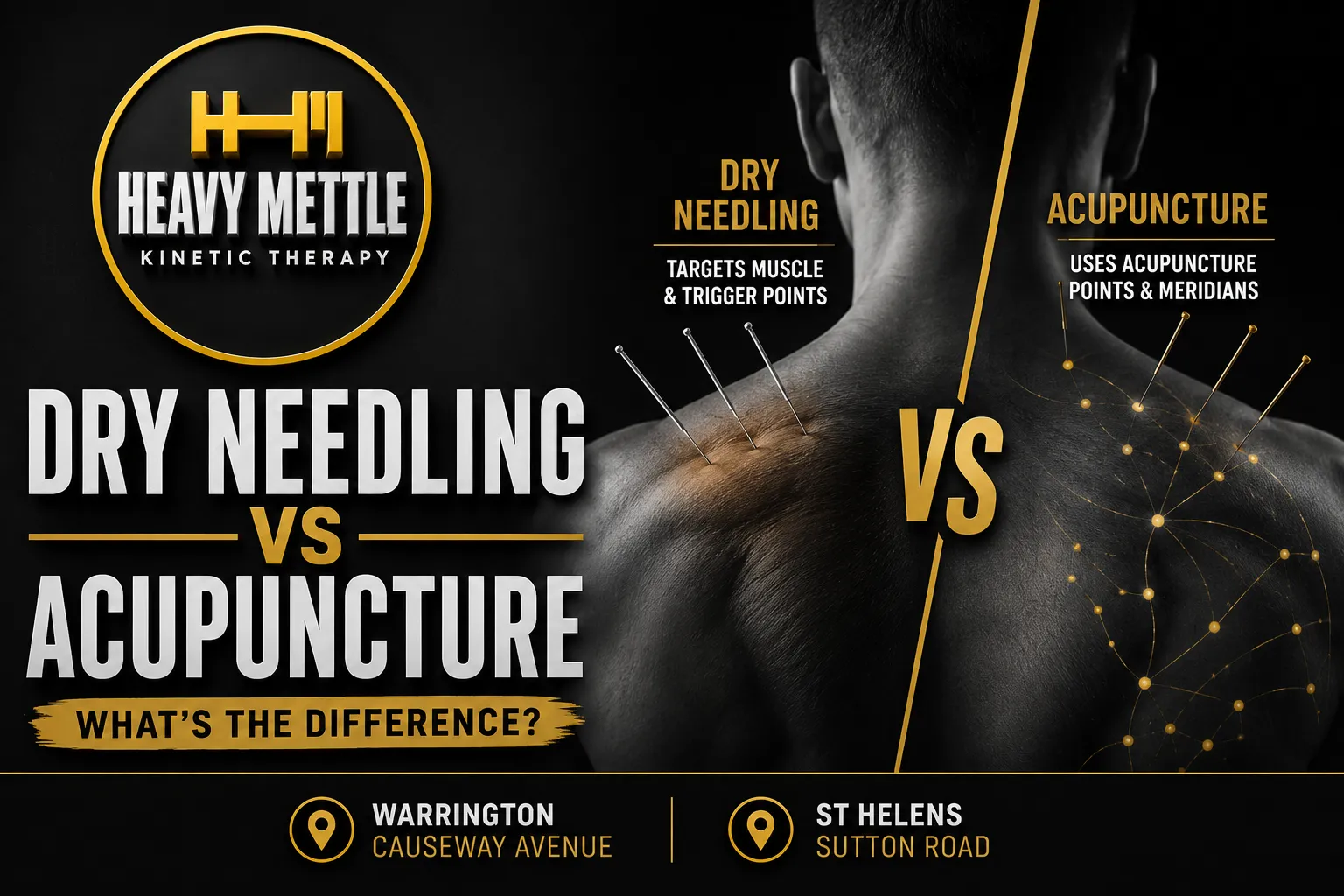
Dry Needling vs Acupuncture: What’s the Main Difference?
The easiest way to explain it is:
The needles may look similar, but the reasoning behind their placement is different.
With dry needling, I’m generally looking at your muscles, movement, tension and the physical problem you’re experiencing to decide which areas need treating.
Traditional acupuncture instead uses established acupuncture points and is based on a different treatment philosophy.
This is why calling every treatment involving thin needles “acupuncture” isn’t really accurate.
Does Dry Needling Hurt?
This is probably one of the first questions people ask when they see the needles.
For most people, dry needling is very manageable.
The needles used are extremely fine, so you may barely notice some of them going in. When a particularly sensitive or tight area is treated, however, you may experience a brief ache, twitch or cramping-type sensation.
It can feel unusual, but treatment shouldn’t simply be a case of seeing how much discomfort you can tolerate.
I’ll always work within what you’re comfortable with.
What Can Dry Needling Be Used For?
At my treatment rooms in Warrington and St Helens, I see everyone from bodybuilders and strength athletes to runners, tradespeople, office workers and people who simply want to move and feel better.
Dry needling may form part of treatment for problems involving:
- Neck and shoulder tension
- Back pain and muscular tightness
- Calf tightness
- Hamstring and quad tension
- Glute and hip tightness
- Training-related muscular problems
- Restricted movement
- Muscular aches and soreness
- Overuse-related muscular problems
It’s important to remember that not every pain requires needling.
A good treatment shouldn’t just be about throwing needles into the area that hurts. The first step is understanding what you’re struggling with and deciding whether dry needling is actually appropriate.
Dry Needling for Gym Training and Sport
Dry needling can be particularly useful for active people.
Repeated training, sport and physical work can leave certain muscles feeling tight, overloaded or difficult to move properly.
If you’re training several times per week, small issues can also start affecting how you perform particular movements.
This doesn’t automatically mean something is damaged.
Sometimes the aim of treatment is simply to help settle an irritated area, reduce excessive muscular tension and get you moving more comfortably again.
I regularly work with bodybuilders, strength athletes, runners, cyclists and recreational gym-goers across Warrington and St Helens.
Treatment is always based around the individual rather than using exactly the same approach on everyone.
Is Dry Needling Better Than Acupuncture?
Not necessarily.
They’re different treatment approaches, so saying one is universally “better” than the other would be misleading.
It depends on why you’re having treatment and what you’re hoping to achieve.
My work at Heavy Mettle Kinetic Therapy is predominantly focused on muscular and musculoskeletal problems. That’s why Multi-Dry Needling fits into the way I work with clients experiencing pain, tightness and restricted movement.
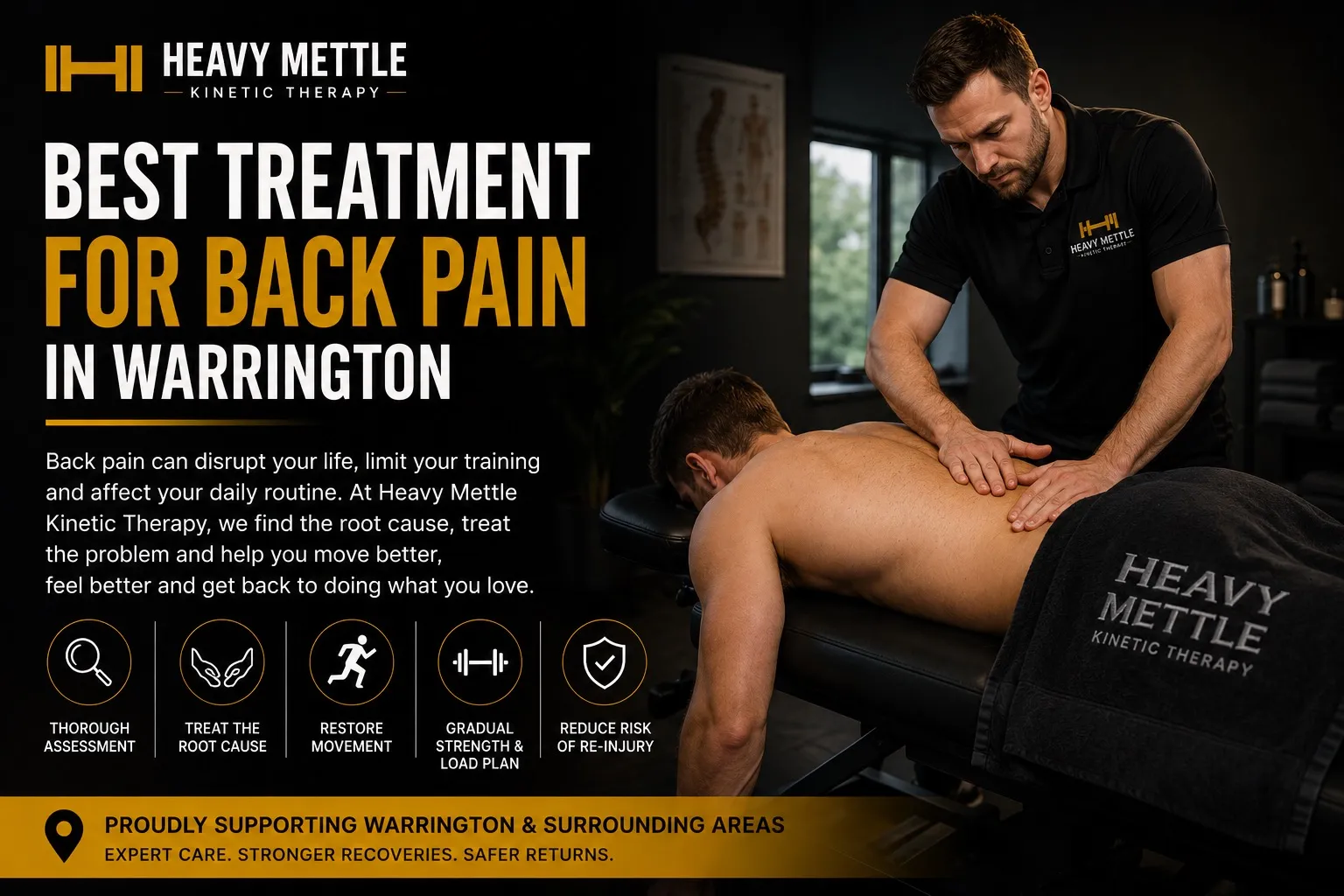
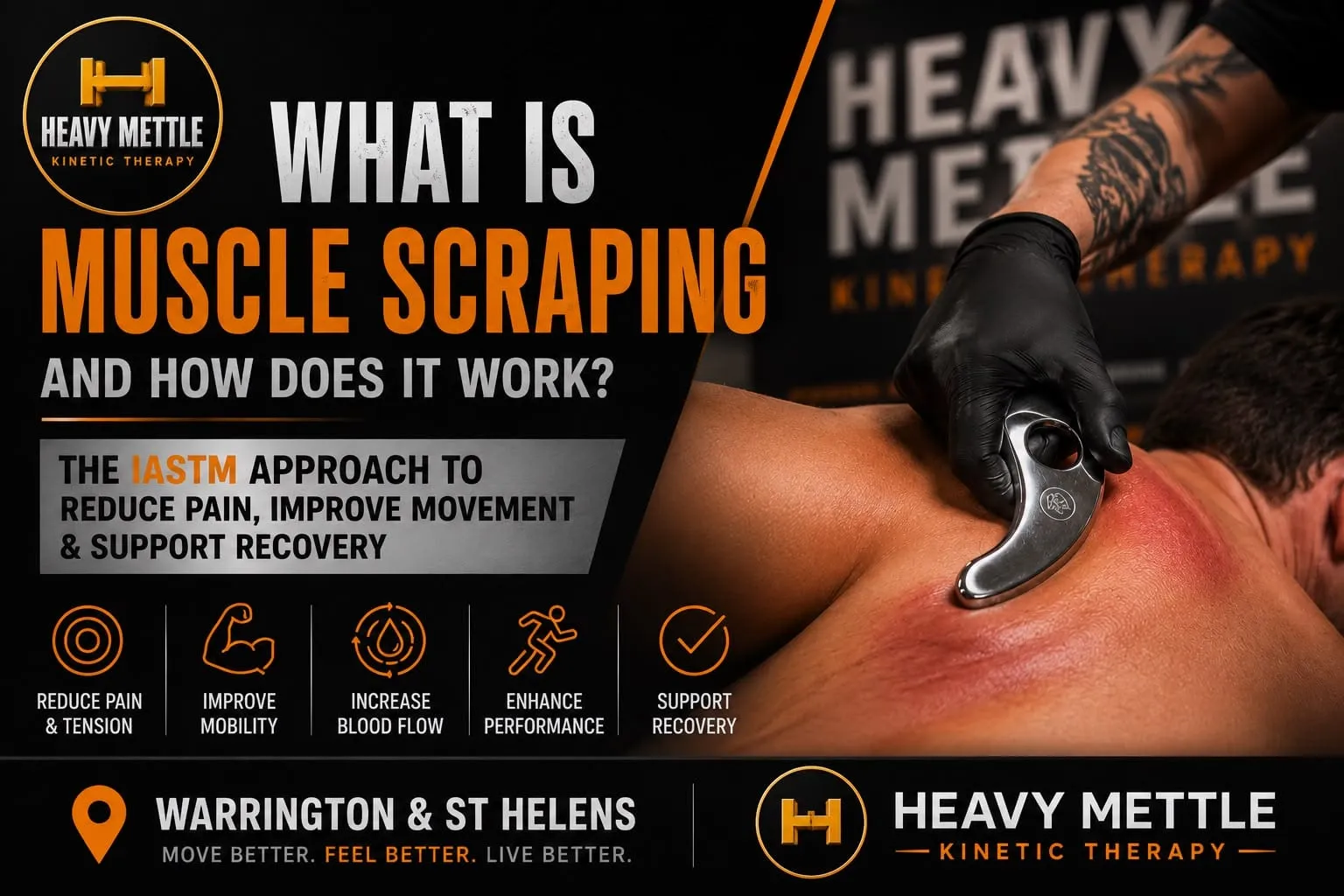
Depending on the individual, I may also recommend Kinetic Therapy / muscle scraping or Sports Massage, rather than assuming dry needling is automatically the right choice.
What Is Multi-Dry Needling?
At Heavy Mettle Kinetic Therapy, I offer Multi-Dry Needling, which allows me to work across several relevant areas during a treatment rather than focusing on one isolated point.
The areas treated will depend entirely on what I find and what you’re experiencing.
For example, if you’re struggling with lower-body tightness, the treatment may involve more than simply needling the exact point where you feel the discomfort.
The body works as a connected system, so assessing the surrounding muscles can help determine which areas are appropriate to treat.
Dry Needling in Warrington
If you’re searching for dry needling in Warrington, I offer appointments from my treatment room inside:
Allegiance Fitness Unit 12/1 Palatine Industrial Estate Causeway Avenue Warrington WA4 6QQ
The Warrington location is convenient for clients travelling from areas including Stockton Heath, Latchford, Grappenhall, Appleton, Walton, Great Sankey, Penketh, Birchwood, Culcheth and surrounding Cheshire areas.
Dry Needling in St Helens
I also provide dry needling in St Helens from my treatment room at:
Sanctus Gym Sutton Road St Helens WA9 3DR
This location allows me to work with clients from St Helens, Rainhill, Eccleston, Prescot, Haydock, Newton-le-Willows and surrounding Merseyside areas.
Which Treatment Should I Book?
If you’re not sure whether you need dry needling, sports massage or Kinetic Therapy, don’t worry about trying to diagnose yourself before booking.
Tell me what’s bothering you, how long you’ve had it and what activities seem to aggravate it.
From there, we can work out which treatment is most appropriate.
The goal isn’t simply to use a particular technique because it’s available. It’s to choose an approach that makes sense for you and the problem you’re dealing with.
Book Dry Needling in Warrington or St Helens
If pain, muscular tightness or restricted movement is affecting your training, sport, work or everyday life, Multi-Dry Needling may be an option worth considering.
Heavy Mettle Kinetic Therapy provides treatments from locations in both Warrington and St Helens, helping clients from across the surrounding Cheshire and Merseyside areas.
Performance Enhancement & Pain Free Living.
Visit www.heavymettle-kinetictherapy.co.uk to find out more or book an appointment.